Heatwaves and the Role of Sustainable Packaging
The intense heatwaves experienced across Europe in recent weeks have once again highlighted the importance of continuing to reduce greenhouse gas emissions. The scientific community agrees that these events are the result of a combination of natural weather patterns and a progressively warmer climate caused by the increasing concentration of greenhouse gases such as CO₂.
Against this backdrop, an interesting question arises:
Can a simple package help fight climate change?
The answer is simple: not on its own, but it can become part of the solution when millions of packages are designed with a lower carbon footprint.
Beyond Recyclability: The Importance of Carbon Footprint

For many years, sustainable packaging has been associated primarily with recyclability. Today, however, we know that another factor is equally important: the carbon footprint of each product.
A carbon footprint measures the greenhouse gas emissions generated throughout a package’s entire life cycle, from raw material extraction to manufacturing, transportation and recycling. This assessment, known as Life Cycle Assessment (LCA), shows that two packages with the same appearance and functionality can have very different climate impacts.
Reducing that footprint means reducing the emissions associated with every unit produced. When we are talking about millions of food packaging products, the cumulative impact becomes highly significant.
Recycled Materials and Eco-Design: The Combination That Makes the Difference
One of the most effective ways to reduce a package’s carbon footprint is by using recycled PET (rPET). In general, producing recycled plastic requires less energy than manufacturing virgin resin, while also supporting the circular economy by giving existing materials a new life.
However, material selection alone is not enough.
True eco-design means developing mono-material products that are easy to recycle, compatible with existing recycling infrastructures and optimised to minimise resource consumption and waste.
The combination of recycled materials and design principles focused on circularity makes it possible to develop sustainable packaging solutions with a lower environmental impact without compromising performance.
QIUB Packaging’s Innovation
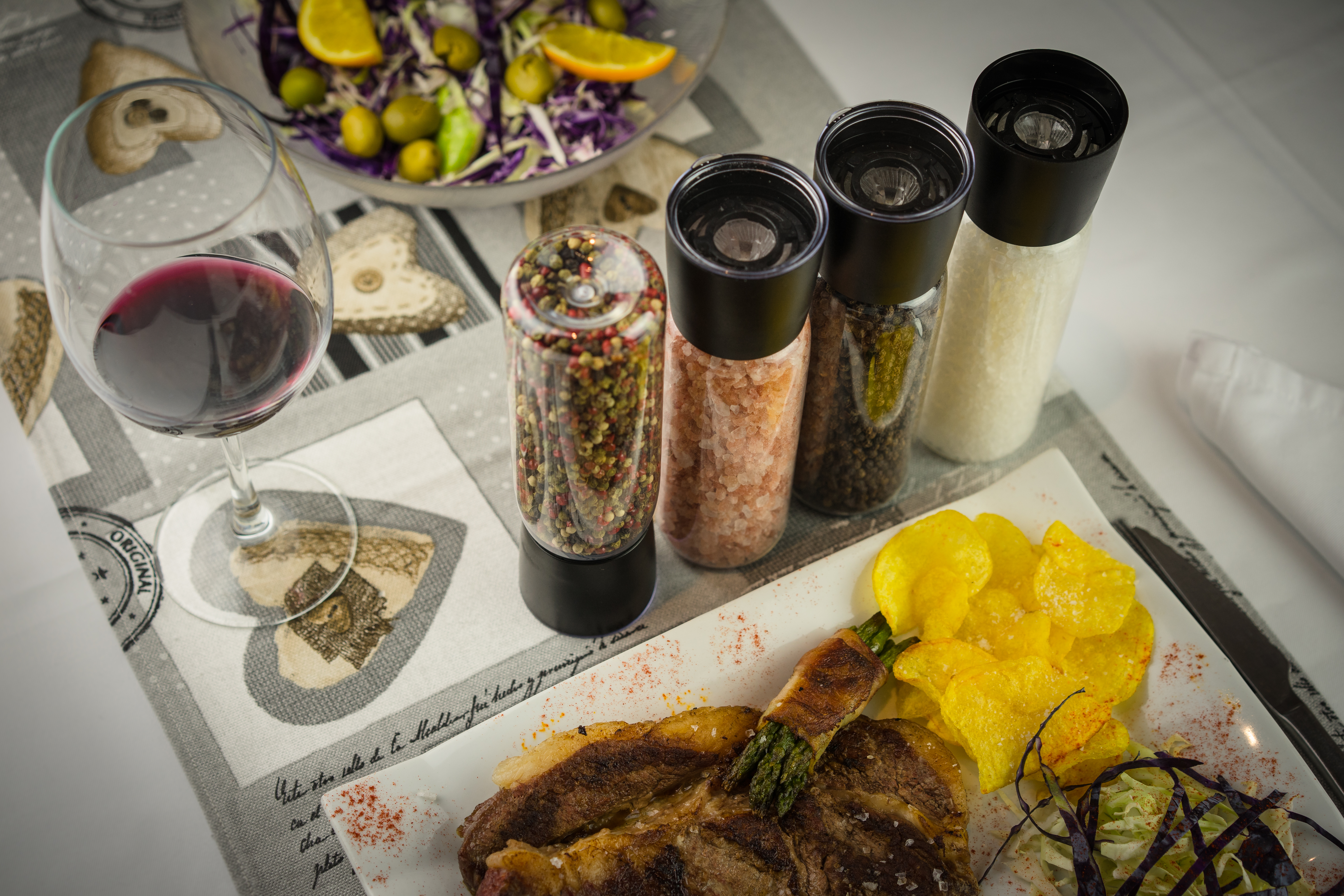
At QIUB Packaging, we have been driving this vision of innovation for many years. Since 2020, we have been the first company in the world to develop spice grinders manufactured entirely from PET and rPET.
Our mono-material grinders have been designed to improve recyclability, facilitate the incorporation of recycled material and contribute to a lower carbon footprint compared to conventional solutions, while maintaining the high performance required by the food packaging industry.
For us, innovation is not simply about creating a better product. It is also about helping our customers reduce the environmental impact of their products through future-ready mono-material packaging solutions.
Millions of Small Improvements Create a Big Impact
Can a single package change the climate?
No.
But millions of packages with a lower carbon footprint can help reduce the overall greenhouse gas emissions of the food industry.
This is how sustainability works: through thousands of small improvements repeated millions of times. Every innovation in materials, every improvement in design and every advance in recyclability contributes to reducing the environmental impact of packaging.
Innovating to Build a More Sustainable Future
There is no single solution capable of stopping climate change. Progress will require continued advances in renewable energy, industrial efficiency, sustainable mobility and the circular economy.
Packaging can also be part of that progress.
At QIUB Packaging, we believe that innovation means developing solutions that create value for our customers while contributing to a more sustainable future.
Looking to develop packaging solutions with a lower carbon footprint? Our team can help you design PET and rPET packaging solutions that combine innovation, functionality, recyclability and sustainability to meet today’s market challenges.


QIUB at INTERPACK 2026